The Price of Free Speech
BY AKIVA LEVINE
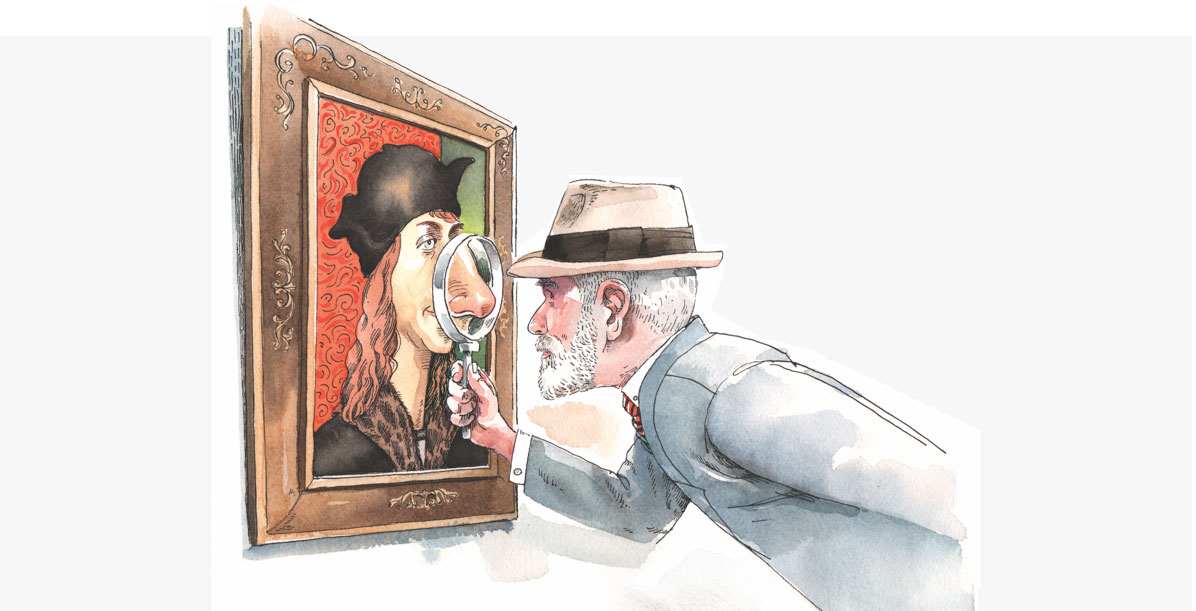
I was standing in line at an airport in Amsterdam when a man behind me noticed my kippah and said, “Free Palestine.” There was no discussion. No debate. No conversation about politics or war. He was not trying to persuade. He was speaking directly to me. In that moment, my Jewish identity alone placed me inside a global political conflict that I had not chosen to enter.
I kept walking, telling myself that this was free speech. I believe in free speech. I still do. But the moment stayed with me. The principle I was defending felt incapable of defending me. I realized something that the classical liberal advocates of free speech often overlook: speech does not always function as an exchange of ideas. Sometimes, it functions to target a person because of who they are.
Freedom of speech is one of the central promises of American democracy. It is premised on the notion that the people, not the state, are the legitimate source and judge of ideas. While this concept has limits (as Justice Robert Jackson understood, “The Constitution is not a suicide pact”), its boundaries do not guarantee citizens’ comfort. Jews do not just theorize about, but live, this principle. Our tradition treats disagreement as a way to pursue truth rather than a distraction from it; machloket l’shem shamayim, or “argument for the sake of heaven.”
Nations that allow open debate have done more than merely tolerate Jews; they have preserved us. During the twentieth century, American Jews relied on the First Amendment to fight discrimination. Lawyers challenged university quotas that limited Jewish enrollment. Journalists exposed antisemitic housing practices. Activists pressured the American government to respond to the Holocaust, and later, to the persecution of Soviet Jews. These efforts were not successful because Jews were popular or powerful, but because they could organize and confront authority without fear of violent retribution.
The historical contrast between the United States and Europe is significant. In Nazi Germany, antisemitism became deadly when free speech disappeared. Once the state decided which ideas were allowed, Jews lost the ability to organize, publish, or legally resist. Censorship left German Jews completely exposed, and then almost completely annihilated. History demonstrates that defending speech, even when it is reprehensible, is safer for Jews than allowing governments to regulate it. When Jews lose the right to speak freely, they also lose their ability to protect themselves.
When George Orwell wrote that “if liberty means anything at all, it means the right to tell people what they do not want to hear,” he was not defending the legitimacy of hatred; he was issuing a practical warning. Minority groups are the first to suffer when the government becomes the final arbiter of acceptable expression. The lesson is straightforward: free speech does not always benefit Jews, but losing it opens doors to the threat of far greater harm.
This understanding of free speech as a guard against state abuse shaped Jewish responses in 1977, when neo-Nazis wanted to march in Skokie, Illinois, a town in which many Holocaust survivors lived. Jewish lawyers at the American Civil Liberties Union (ACLU) defended the Nazis’ right to demonstrate. They recognized the power of precedent and set aside their disgust toward the demonstrators. If the government could ban hateful speech today, it could ban Jewish speech tomorrow. The emotional cost was severe, but the long-term danger of censorship was greater.
Today, defending the First Amendment has become more difficult as vile slander against Jews and Israel has noticeably increased. Criticizing the Israeli government is not inherently wrong, but many hold Israel as the ultimate symbol of evil on the world stage. Hannah Arendt cautioned that Israel could come to be “the Jew among nations,” judged by standards applied to no other state. Many critics today overstep policy questions and challenge Israel’s fundamental legitimacy.
As a result, free speech about Israel often affects Jews whether or not that is the speaker’s intention. In theory, the speaker is criticizing a government. In practice, Jewish listeners often hear something else: that their history is illegitimate, their peoplehood questionable, and their identity conditional. Jean-Paul Sartre observed that antisemitic language is often used “not to persuade, but to intimidate.” Today, political slogans frequently cross that line.
This dynamic is especially visible on American college campuses. The chant “From the river to the sea!” is commonly yelled in the faces of Jewish students. Libelous posters appear overnight, depicting Prime Minister Bibi Netanyahu as a bloodthirsty, horned demon. Jewish studies classes are interrupted by protestors. Jewish students weigh whether wearing a kippah, walking through crowds, or participating in seminars is worth the risk of harassment. We have increasingly observed what happens when political vitriol becomes part of daily life for a generation of Jewish students.
For many Jews, free speech has now begun to feel like a cudgel antisemites use against them. While other groups may describe words as violence, Jews are often told that the same speech against “Zionists” is simply for the purpose of debate or education. This dynamic creates tension. Speech cannot be defended only when it is convenient but pretending that bigotry and slander of Israel are harmless is dishonest. Discourse shapes norms. When slogans frame Jewish political self-determination as criminal, Jews inevitably face interpersonal and institutional exclusion.
It is understandable for Jews to want limits on speech, but the answer is not censorship. What American Jews need now is not less, but better speech. We need universities that maintain the safety of their students without appointing themselves the arbiters of acceptable thought. That requires care, clarity, and seriousness. It also requires confidence from Jews themselves. We must speak without apology, refusing both silence and reactive outrage.
I think back to that moment in the Amsterdam airport and to the chants echoing across Columbia’s campus. I still regard free speech as one of America’s greatest moral achievements.
Suggested Reading

Shining Our Light Unto the Nations Through Jewish Teachings
BY ADIN LINDEN Jewish history is rife with enemies, from the Egyptians to the descendants of Amalek, a lineage that is seen as the greatest enemy of the Jews and…
Between Separating Ourselves and Seeing Ourselves in Others
BY YAEL BURGESS EISENBERG When a gentile came before Hillel and said he would convert to Judaism if Hillel could teach him the entire Torah while standing on one foot,…
Fortifying the “Torah” in Torah u-madda: A Plea to Modern Orthodox Day Schools
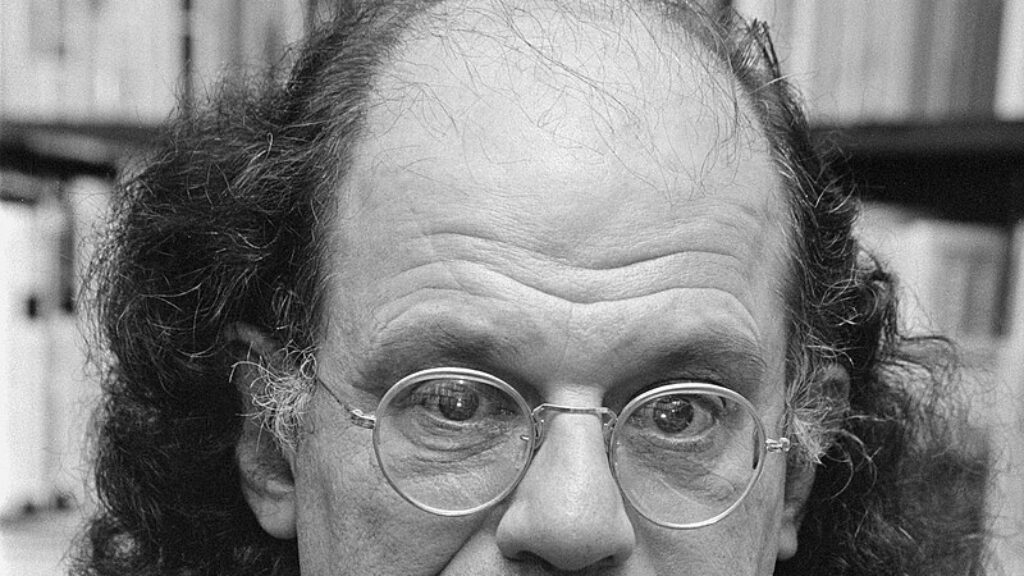
In a deep look at his background and motivations, the picture of Jewish writer Allen Ginsberg becomes more clear to the observer. His difficult past and masterful mix of secular, religious, and kabbalistic, as well as various other, themes in his work came to a head in his poem "Kaddish", written to be an elegy for his mother.

Learning as Creation: The Power of Jewish Education
BY ZACHARY KROHN It is no secret that education is one of the highest values of Judaism, and one can give many reasons for why that is the case. Education…