Lessons on Free Speech from the Hebrew Bible
BY ORLY BERENSON
Although the concept of free speech did not originate in America, America’s commitment to free expression is what makes this country exceptional. Jews are familiar with the power of speech; the Tanakh is full of references to it. The Hebrew Bible teaches us that God created the world through speech: “God said, ‘Let there be light,’ and there was light” (Genesis 1:3). Human beings, created in the Divine image, similarly possess the ability to speak, with the enormous responsibility that comes with it.
The Jewish tradition understands that speech is a unique gift that can destroy as easily as it can create. Leviticus commands, “Do not go around as a gossiper among your people, do not stand by the blood of your neighbor” (Leviticus 19:16). The Torah instructs us to use our voices for the good, and to confront injustices where and when we see them. The First Amendment similarly reflects this value when it says that we as American citizens have the right to “petition the government for a redress of grievances.” According to American law, when we see something wrong in our society, we are allowed to dissent.
American law permits us to protest, and Torah law obligates us to speak out against wrongdoing. How should we balance condemning injustice with preserving the wellbeing and safety of others?
The answer lies in the verse above. God simultaneously commands us to speak and not to speak; to advocate against injustice, but also to refrain from harmful smears. Jews must understand that speech is not good in and of itself. Much of the speech that the First Amendment legally protects is detrimental. The Torah offers more than a commandment; it provides a warning: do not remain silent at the plight of your fellows, but do not allow your speech to lead to harm. We must exercise the unique power we are given with care. Our words can create, but they can also destroy; the verse ends with a final reminder that God is watching.
To ultimately assess whether the First Amendment is an “absolute good,” we must recognize that although we are capable of speech, sometimes it is best to restrain ourselves in the interest of our fellow citizens. The American Jewish community is well acquainted with this tension. We publicly oppose antisemitism because, as the Tanakh indicates, it is unacceptable to merely stand idly by their spilled blood. However, those who slander the Jewish people enjoy the same freedom to speak as we do, and their lies lead to real acts of violence. For American Jews, free speech is both a blessing and a burden: a blessing because it allows us to defend ourselves, and a burden because enemies of the Jewish people can use the same tools against us.
“Death and life are in the hands of the tongue” (Proverbs 18:21). Every individual has tremendous power. While some people choose to incite hate and violence with their speech, others, especially minority communities, can use their own freedom of speech to advocate for themselves. Although free speech can enable hate and violence, it also allows minority groups to help repair civil discourse. American Jews can engage this task by rooting our speech in both Torah and democratic ideals.
Suggested Reading

Shining Our Light Unto the Nations Through Jewish Teachings
BY ADIN LINDEN Jewish history is rife with enemies, from the Egyptians to the descendants of Amalek, a lineage that is seen as the greatest enemy of the Jews and…
Between Separating Ourselves and Seeing Ourselves in Others
BY YAEL BURGESS EISENBERG When a gentile came before Hillel and said he would convert to Judaism if Hillel could teach him the entire Torah while standing on one foot,…
Fortifying the “Torah” in Torah u-madda: A Plea to Modern Orthodox Day Schools
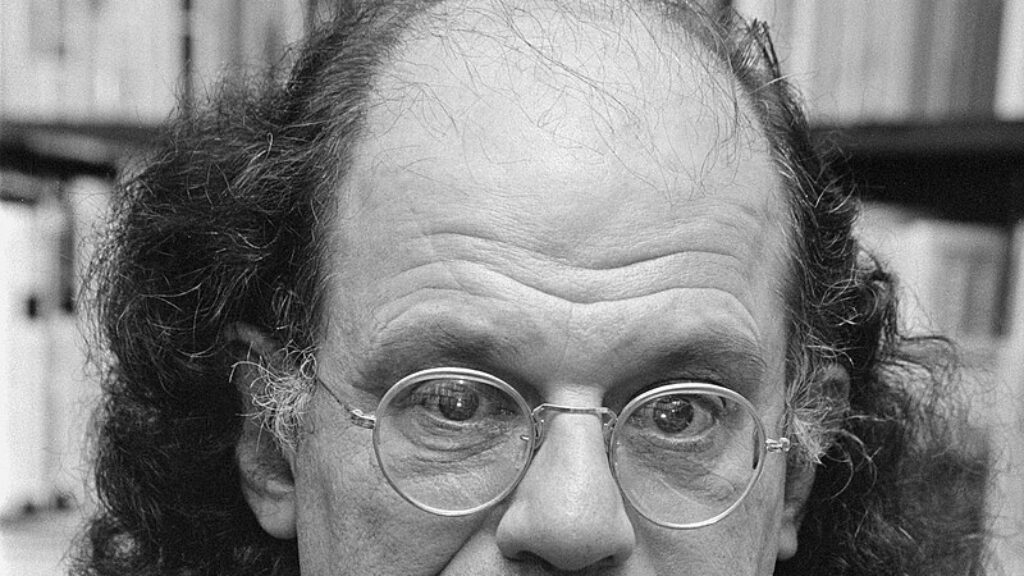
In a deep look at his background and motivations, the picture of Jewish writer Allen Ginsberg becomes more clear to the observer. His difficult past and masterful mix of secular, religious, and kabbalistic, as well as various other, themes in his work came to a head in his poem "Kaddish", written to be an elegy for his mother.

Learning as Creation: The Power of Jewish Education
BY ZACHARY KROHN It is no secret that education is one of the highest values of Judaism, and one can give many reasons for why that is the case. Education…