How the Assassination of Charlie Kirk Broke the Conservative Movement in Two
BY GABRIEL HARON
Charlie Kirk’s assassination in September 2025 sent shockwaves through the American conservative movement. Tributes poured in from all sides of the Republican political spectrum. Whether it was constitutional conservatives like Ben Shapiro or populist influencers like Tucker Carlson, everyone stopped in their tracks and briefly united in their grief. Unfortunately, this harmony was short-lived. Rather than unify the Right, Kirk’s murder laid bare the tensions that had long been simmering beneath the surface of the political right wing. A growing divide emerged between those who sought moral clarity and truth in the aftermath of a public assassination of a beloved and influential activist, and a conspiratorial movement driven by increasingly charged rhetoric. Kirk, who was only thirty-one years old when he was assassinated, founded Turning Point USA (TPUSA), arguably one of the most influential political organizations in American history. Although his mission lives on, the millions Kirk inspired are at a crossroads. As his movement has now split in two, and with no guiding figure to lead the pack, the Right faces a defining question: will it anchor itself in principle and moral truth, or plunge into a storm of conspiracy that could tear it apart from within?
Just days after Charlie Kirk’s passing, the commentary from well-known populist figures, particularly Candace Owens and Tucker Carlson, revealed how wide this fracture had become. Rather than focusing on verified facts, both leaned into suspicion of government agencies, with Owens outright accusing the government and other shadowy actors of murdering Kirk. She has repeatedly stated on her show, “We don’t trust the feds,” while claiming that federal agencies operate at the behest of Israel. Meanwhile, at Kirk’s memorial, Carlson alluded to a group of unnamed “powerful people” that murdered him, just like they killed Jesus in Jerusalem while “eating hummus.” Though Owens and Carlson like to say that they are “just asking questions,” both are propagating deeply misleading narratives that are grievance-driven and laden with antisemitic tropes. In doing so, they have shifted attention away from accountability and toward conspiracy, replacing clarity with insinuation when restraint and truth are most needed.
For Ben Shapiro and his constitutionalist allies on the other side of this divide, Kirk’s death was not an opportunity for spectacle; he made every effort towards unity with the populists until it became clear it was time to pick a side. At AmericaFest 2025, TPUSA’s marquee event, Shapiro directly criticized those who knowingly disseminated misinformation and conspiracies, declaring moral clarity and truth to be the definitive markers of the Republican party. Though many of his detractors argued that Shapiro was trying to restrict his opponents’ freedom of expression, he asserted that not all ideas are created equal, and some warrant rejection rather than engagement. Ben Shapiro’s response marked a clear attempt to draw ideological boundaries within the movement, and to distinguish intellectually dishonest speculation from moral truth.
The chasm between these two sides has widened into a raging ideological battle, as conservatives struggle to confront a small but vocal minority energized by the passions and conspiracy theories promoted by figures like Owens and Carlson. However, this current landscape is not without precedent in American history. The founders navigated this kind of factional conflict and sought to address it in the Federalist Papers, the precursor to the American Constitution.
In Federalist Number 10, James Madison offers a notably relevant framework for understanding the contemporary post-Kirk rift. He claimed that political groups driven by passion, as opposed to reason, posed a serious danger to Republican governance, no matter how small this faction might be. He stated that even ideas only adopted by a minority have ripple effects that warp public discourse.
However, it’s not simply Madison’s diagnosis that is interesting, it’s his solutions. Madison rejected the idea that the people should attempt to uproot factions. He believed that they are inevitably a fundamental component of human nature. Instead, Madison believed that the solution to radical factions was to control their effects by increasing checks on power, thereby impeding their spread. Without institutional or moral constraints, Madison warned, even marginal factions can distort public discourse and destabilize republican order.
When Charlie Kirk was alive, he functioned as a moderating force precisely in that Madisonian sense. He provided a bridge between populist principles and constitutional conservatism, without allowing either side to metastasize into ideological extremism. Without him, the risk is clear and rapidly materializing in our faces. A faction in which antisemitic speech goes unchallenged cannot be allowed to drag the conservative movement down with it. Those who choose to peddle conspiracies should be curbed before America descends with them. Charlie once proved that unity without ideological compromise was possible; he was a charismatic leader who cannot be replaced. To unite once more, conservatives must decide which ideological boundaries are inviolable and find common cause with those committed to a moral direction for the movement. The namesake of Charlie Kirk’s organization rings increasingly true: America is at a turning point, and it’s up to the people to reject the path of conspiracy in favor of a path of truth and decency.
Suggested Reading

Shining Our Light Unto the Nations Through Jewish Teachings
BY ADIN LINDEN Jewish history is rife with enemies, from the Egyptians to the descendants of Amalek, a lineage that is seen as the greatest enemy of the Jews and…
Between Separating Ourselves and Seeing Ourselves in Others
BY YAEL BURGESS EISENBERG When a gentile came before Hillel and said he would convert to Judaism if Hillel could teach him the entire Torah while standing on one foot,…
Fortifying the “Torah” in Torah u-madda: A Plea to Modern Orthodox Day Schools
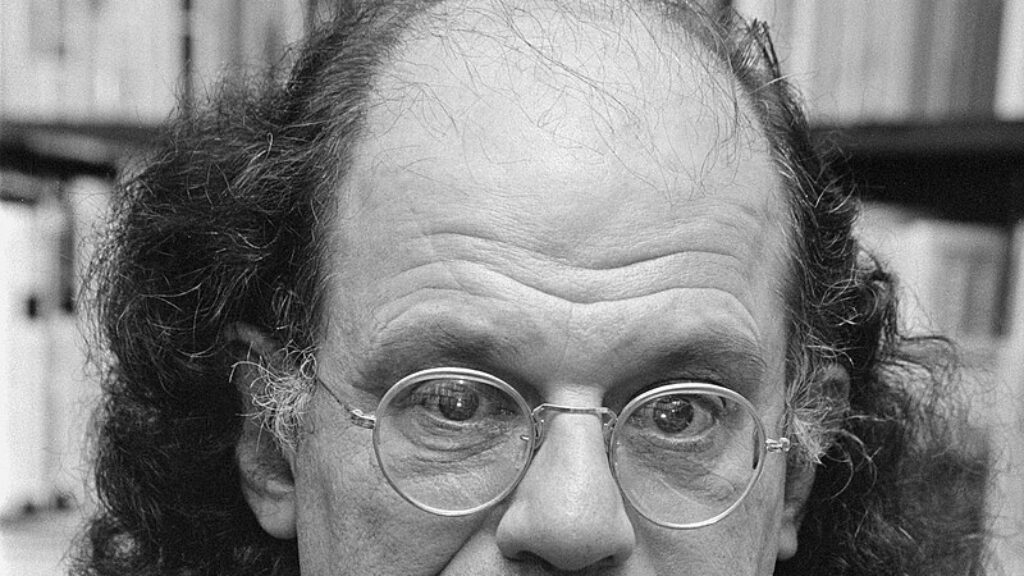
In a deep look at his background and motivations, the picture of Jewish writer Allen Ginsberg becomes more clear to the observer. His difficult past and masterful mix of secular, religious, and kabbalistic, as well as various other, themes in his work came to a head in his poem "Kaddish", written to be an elegy for his mother.

Learning as Creation: The Power of Jewish Education
BY ZACHARY KROHN It is no secret that education is one of the highest values of Judaism, and one can give many reasons for why that is the case. Education…